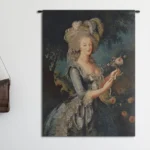
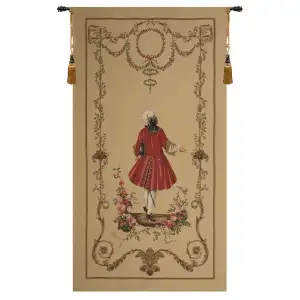

Investing in a large wall tapestry is one of the most impactful decorating decisions you can make. Unlike smaller decorative items, a large tapestry becomes the defining visual element of a room — the first thing guests notice and the piece around which everything else is arranged. Getting the choice right requires thinking through a handful of key considerations: size, design, quality, and installation. This guide covers all of them in practical detail.
Measuring for the Right Size
Before browsing, measure your wall carefully. Note the full width of the wall and the height from floor to ceiling (or to the top of any architectural features like wainscoting or picture rails). Large tapestries typically range from around 120cm wide to over 200cm, with heights from 80cm to 160cm or more. As a general principle, a tapestry should occupy roughly 60–75% of the wall width for balanced proportions. Leave adequate space above and below: in a dining room, the bottom of the tapestry should typically sit 15–25cm above the top of any sideboard or credenza beneath it. In a hallway or living room without furniture below, consider hanging the tapestry slightly higher — approximately at eye level for the midpoint of the design.
Understanding Design Scales
A large tapestry carries much more design detail than a small piece — and that detail reads differently at scale. A design that looks intricate and refined in a photograph may feel overwhelming at 180cm wide if the repeat is very tight and complex. Conversely, a design that looks simple in a small image may reveal surprising depth and narrative richness when seen at full size. Whenever possible, view large tapestries in person, or look for images showing them installed in actual rooms. This gives a much more reliable sense of how the scale and density of the design will read in your space.
Colour Selection for Large Formats
At large scale, colour has a magnified influence. A tapestry with deep burgundy and forest green tones will actively warm a room; one with cool blues and greys will have the opposite effect. Consider the room’s existing colour story carefully. If the room uses warm neutrals — cream, camel, terracotta — look for tapestries with warm ochre, gold, or earthy red tones. If the room is cooler in character — white walls, grey furnishings, stone floors — a tapestry in soft blue-green or silvery tones will feel more harmonious. For an outstanding range of large-format designs across the full spectrum of traditional European colour palettes, explore the collection of large tapestries for walls at Charlotte Home Furnishings.
Quality Indicators to Look For
Large tapestries vary significantly in quality. At the premium end, you’ll find Jacquard-woven pieces in wool or wool-cotton blends with deep, complex colour gradations and well-defined borders. At the budget end, you’ll find thinner weavings with fewer colours, less precise detail, and borders that may be applied rather than woven. Key quality indicators include: the weight and density of the weave (heavier is generally better); the sharpness of fine details like faces and plant stems; the presence of woven rather than printed or applied borders; and the overall flatness and squareness of the finished piece. A quality large tapestry should hang straight and flat without curling or distortion.
How to Hang a Large Tapestry Safely
Large tapestries require secure hanging. The most common method uses a wooden or metal rod threaded through a sleeve sewn along the top of the tapestry. The rod is then supported by brackets mounted to the wall — ideally into studs or masonry for pieces over 5kg. For very wide pieces (over 160cm), three support points are better than two to prevent sagging at the centre. An alternative for extremely heavy tapestries is a continuous wall-mounted batten along the full width: the tapestry is attached to this via Velcro or a clip system, distributing weight evenly and allowing the piece to be removed easily for cleaning or relocation.
Care and Long-Term Maintenance
A large tapestry properly maintained will last for generations. The primary enemies are ultraviolet light, which fades dyes, and accumulated dust, which can work into the fibres and dull the surface over time. Position large tapestries away from direct sunlight, or use UV-filtering window treatments in rooms with strong sun exposure. Dust the surface regularly with a soft brush working in the direction of the weave. For periodic deeper cleaning, lay the tapestry flat and vacuum on a low setting with a mesh screen between the tapestry and the nozzle. Avoid machine washing; if thorough cleaning is needed, consult a specialist textile conservator.
Where to Find the Best Large Tapestries
The best sources combine a wide range of authentic woven designs with transparent information about materials, dimensions, and weaving methods. For a comprehensive selection of traditional European large-format pieces, the range of big and oversized woven wall tapestries at Charlotte Home Furnishings offers a carefully curated collection covering hunting, millefleurs, verdure, and narrative designs — all presented with the detail needed to make a confident, informed choice.