
Throughout history, tapestry and religious devotion have been intimately connected. From the great narrative cycles of the medieval church — depicting scenes from the life of Christ, the Virgin, and the saints — to the votive tapestries commissioned by wealthy patrons as acts of thanksgiving or piety, woven religious art has always held a special place at the intersection of faith and fine craft. Today, religious tapestries continue to serve both devotional and purely aesthetic purposes, bringing the imagery of sacred art into homes, churches, and spaces of contemplation with a warmth and physical presence that no printed reproduction can match.
The History of Religious Tapestry
The tradition of woven religious imagery stretches back to at least the early medieval period. The great workshops of Flanders, Burgundy, and later France produced vast narrative cycles for cathedrals and church institutions — tapestries depicting the Apocalypse of St John, the Passion of Christ, scenes from the Old and New Testaments, and the lives of the saints. These were not merely decorative objects: they served an educational function in an era of widespread illiteracy, translating the stories of scripture and hagiography into vivid visual form accessible to all who entered the church. The quality of workmanship invested in these commissions was extraordinary — some surviving medieval religious tapestries represent the finest examples of the weaver’s art ever produced.
Key Themes in Religious Tapestry Design
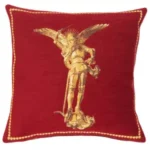
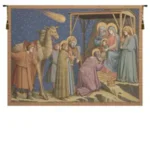
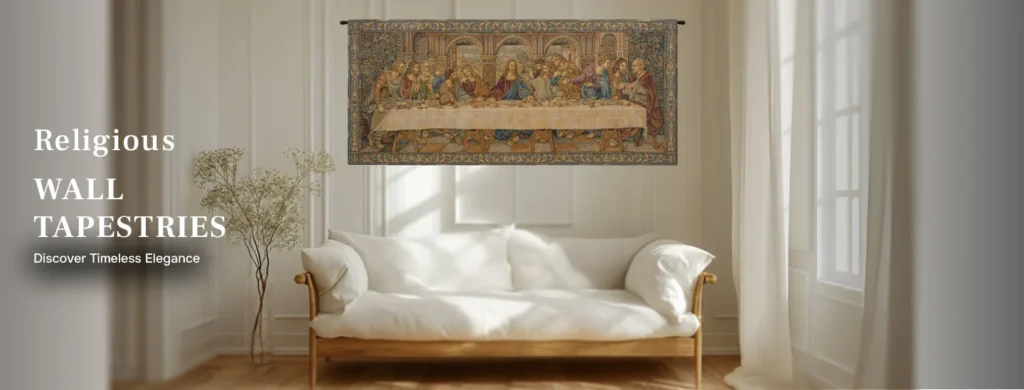
Religious tapestries encompass an enormous range of subjects. Biblical scenes — the Nativity, the Annunciation, the Last Supper, the Resurrection — are among the most enduringly popular, drawn from both the Old and New Testaments. Marian subjects, particularly the Annunciation and the Madonna and Child, have a long tapestry tradition in Catholic devotional culture. Scenes from the lives of the saints — St Francis of Assisi, St George and the Dragon, St Michael defeating Lucifer — combine narrative drama with strong visual compositions well-suited to tapestry form. In addition to figurative narrative, religious tapestry design includes purely symbolic compositions: crosses, doves, chalices, vines, and fish woven into abstract or semi-abstract patterns that carry devotional meaning without explicit narrative. For a broad selection spanning all of these traditions, explore the collection of religious wall tapestries at Charlotte Home Furnishings.
Religious Tapestries in the Home
In domestic settings, religious tapestries serve a variety of purposes. For practising Christians, they function as devotional objects that sanctify domestic space — a tapestry of the Nativity in a living room, or a Madonna and Child in a bedroom or prayer corner, expresses faith through beauty in a tradition with deep historical roots. For those drawn to the aesthetic tradition of Christian art without a specifically devotional intent, religious tapestries offer access to some of the most technically accomplished and visually powerful imagery in Western art history. A tapestry after a Fra Angelico Annunciation, or depicting a scene from a Flemish altarpiece, brings the full visual language of medieval and Renaissance religious painting into the room in textile form — warm, textured, and physically present in a way that a framed reproduction print cannot achieve.
Choosing a Religious Tapestry
When selecting a religious tapestry for the home, consider first the intended purpose: devotional display, aesthetic appreciation, or both. For devotional purposes, choose designs whose iconography you find genuinely moving and spiritually resonant. For primarily aesthetic purposes, prioritise compositional strength, colour richness, and weaving quality. In either case, consider the room’s existing character: religious tapestries in dark, richly coloured palettes suit traditional, period-furnished rooms; lighter, more graphic designs work better in contemporary settings. Size is also a key consideration — a small Madonna and Child works well in a bedroom or study, while a large narrative scene suits a dining room, hallway, or formal sitting room.
Quality and Longevity
A quality religious tapestry, properly cared for, will remain a meaningful presence in your home for decades. The same principles of care apply as to all tapestry textiles: protect from direct sunlight, dust regularly, vacuum with a protective mesh screen on a low setting, and store rolled if removed. For an investment in sacred beauty that will endure, the range of religious wall tapestries for the home offers carefully woven pieces that honour the long tradition of sacred textile art with genuine quality and craftsmanship.