


Clear pavement markings are vital for everyone’s safety and smooth traffic flow. Whether it’s a bustling city street, a quiet school parking lot, or a busy warehouse, well-defined lines and symbols guide drivers and pedestrians. These markings help prevent accidents and keep things organized. So, how do you achieve these crisp, lasting lines and symbols effectively? The answer often lies in using high-quality Traffic Marking Stencils.These stencils are essential tools for any marking project. They allow for consistent, professional results every time. They are used by municipalities, construction companies, and property managers alike. Learning how to choose, apply, and maintain them will make a big difference in your projects. This guide will walk you through everything you need to know.
Why Traffic Marking Stencils Are Essential for Pavements
Traffic marking stencils are more than just pieces of plastic or metal. They are key to creating orderly and safe environments. They provide a precise way to apply important messages and directions onto various surfaces.
Enhancing Safety & Traffic Flow
Clear pavement markings play a huge role in public safety. They tell drivers where to stop, turn, or yield. They also show pedestrians where it’s safe to walk. Without these visual cues, confusion and accidents would increase dramatically. Stencils make sure these critical symbols are uniform and easy to understand. They help manage traffic in busy areas like parking lots, crosswalks, and industrial zones.
Ensuring Compliance with Standards
Different regions have specific rules for pavement markings. These rules cover things like symbol shapes, sizes, and colors. Using quality stencils helps you meet these important safety standards. This is especially true for specialized markings. For example, accessible parking spaces have very specific design requirements. Meeting these guidelines is not just good practice, it’s often a legal necessity.
Durability & Cost-Effectiveness
Investing in good stencils pays off. High-quality stencils can be reused many times. This makes them a cost-effective solution over the long run. When paired with the right pavement marking paint, they create markings that stand up to heavy traffic and harsh weather. This means less frequent re-marking. It saves both time and money.
Types of Traffic Marking Stencils: Finding Your Perfect Match
Not all stencils are the same. They come in different materials and designs to suit various needs. Choosing the right one depends on your project’s specific demands.
Common Stencil Materials Compared
The material of your stencil affects its performance and lifespan.
- Rigid Plastic (like Polyethylene): These stencils are tough and can be reused many times. They are easy to clean and resist many chemicals. However, they might not work as well on very uneven surfaces.
- Flexible Plastic (like LDPE): This material is lighter and can bend. It is great for slightly curved or textured surfaces. Yet, it might not give the sharpest lines compared to more rigid options.
- Aluminum: Aluminum stencils are very durable and precise. They last a very long time and create exceptionally crisp markings. They are a good choice for frequent, heavy-duty use. However, their initial cost is higher.
Essential Traffic Symbols & Designs
There’s a stencil for almost every marking need.
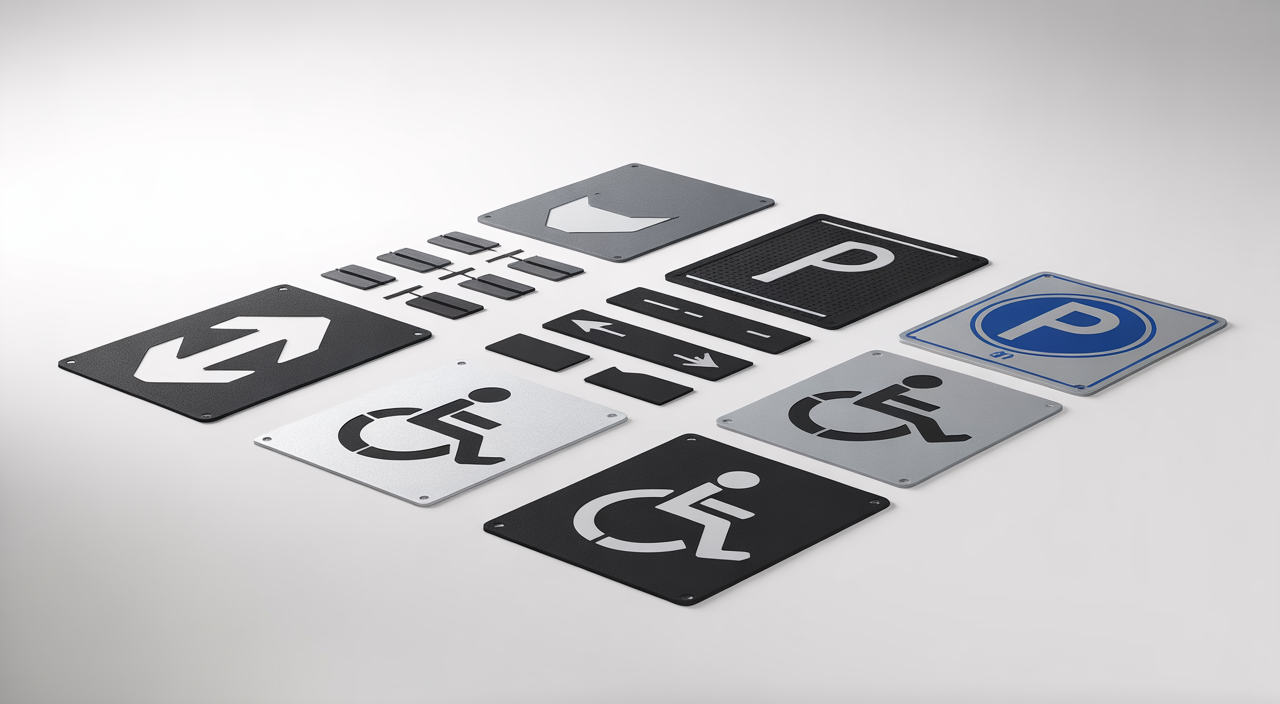
- Parking Lot Stencils: These include symbols for handicap parking, “Reserved” signs, “No Parking” zones, and arrows to guide vehicles. You might also find stencils for electric vehicle charging spots. For more ideas on how to improve these areas, consider a parking lot painting makeover.
- Roadway & Directional Stencils: Think of the big arrows on roads telling you to go straight or turn. These also include “STOP” and “YIELD” messages. Even dedicated “BIKE LANE” markings use stencils.
- Numerical & Alphabetical Stencils: These are handy for numbering parking spaces, bays in a warehouse, or different zones.
- Custom Stencils: Sometimes, a standard stencil just won’t do. Custom options allow you to create unique logos or specific instructions for your property.
Explore a comprehensive selection of high-quality Traffic Marking Stencils for every project need.
Mastering Traffic Marking Stencil Application for Flawless Results
Applying stencils correctly makes all the difference. A good application ensures clear, long-lasting markings. It also avoids costly mistakes.
Prepping Your Surface: The Foundation for Success
Before you even touch a stencil, prepare the area.
- Cleanliness is Key: Remove all dirt, dust, gravel, and any loose debris. Oil spots or grease will prevent paint from sticking. A pressure washer can be very helpful here.
- Ensure It’s Dry: Paint needs a dry surface to adhere properly. Moisture can lead to bubbling or peeling paint later on.
- Measure and Mark: Use chalk lines or tape to outline where your stencil will go. This ensures accurate placement and alignment.
Step-by-Step Stencil Use
Follow these steps for the best results:
- Position and Secure: Place your stencil exactly where you want it. Use weights, tape, or even a helper to hold it firmly in place. This prevents it from shifting during painting.
- Choose Your Paint and Method: Select a durable pavement marking paint. For large areas, a spray machine or roller works well. For smaller details, a brush is better.
- Apply Evenly: Apply paint in thin, even coats. Multiple thin coats are better than one thick coat. A thick coat can cause the paint to bleed under the stencil edges.
- Allow Drying Time: Check your paint’s instructions for drying times between coats. Also, let the final marking dry completely before allowing traffic over it.
Common Mistakes to Avoid
Watch out for these pitfalls:
- Rushing the Job: Patience is crucial. Rushing can lead to messy lines and paint bleed.
- Too Much Paint: Over-applying paint is the main cause of bleed-through. Less is often more.
- Improper Stencil Placement: Always double-check your measurements and alignment. A crooked line is hard to fix.
Maximizing Longevity: Care and Maintenance of Your Stencils
Proper care of your stencils extends their life. It protects your investment and ensures they are ready for the next project.
Cleaning Your Stencils After Each Use
Cleaning immediately is vital.
- Remove Excess Paint: Scrape off any large paint clumps while the paint is still wet.
- Use the Right Cleaner: The type of cleaner depends on your paint. Water-based paints clean up with water. Oil-based paints need a solvent.
- Scrub Gently: Use a stiff brush to remove paint residue from all edges. Make sure the stencil is completely clean.
Proper Storage Techniques
How you store your stencils matters.
- Store Flat: Lay stencils flat to prevent warping or bending. If you must hang them, ensure they are supported evenly.
- Keep Dry: Store stencils in a dry place, away from extreme temperatures. Moisture can degrade certain materials over time.
- Protect from Damage: Keep stencils away from heavy objects that could bend or break them.
Extending the Life of Your Investment
A little extra care goes a long way. Handle your stencils carefully when moving them. Avoid dragging them, which can cause wear and tear. If a small part gets damaged, sometimes a simple repair with strong tape can extend its use. Good storage and careful handling will ensure your stencils last for many projects to come.
Choosing Your Supplier for Quality Stencils
When it comes to purchasing traffic marking stencils, selecting a reputable supplier is important. A good supplier offers quality products, a wide selection, and reliable support.
Quality You Can Trust
Always look for stencils made from durable materials that can withstand repeated use and tough outdoor conditions. High-quality stencils ensure crisp lines and a professional finish every time. This helps you achieve the best results for your pavement marking projects. Some companies even share insider secrets about pavement marking stencils, offering valuable insights.
Wide Selection & Custom Options
A good supplier should offer a comprehensive range of standard traffic symbols. This includes parking lot, roadway, and directional markings. The ability to create custom stencils for unique needs is also a huge benefit. This ensures you can find exactly what your project demands.
Expert Support & Fast Delivery
Look for a supplier that provides excellent customer service. They should be able to answer your questions and help you choose the right products. Efficient shipping is also crucial to keep your projects on schedule.
Conclusion
Traffic marking stencils are indispensable tools for creating clear, safe, and compliant pavement markings. By understanding the different types of stencils, how to apply them correctly, and how to maintain them, you can achieve professional and lasting results. Investing in quality stencils and knowing how to use them effectively will enhance safety, improve traffic flow, and ensure your projects meet all necessary standards. Ready to upgrade your pavement markings? Browse an extensive inventory of traffic marking stencils and related products today!
Frequently Asked Questions
What kind of paint should I use with traffic marking stencils?
You should always use specialized pavement marking paint. These paints are designed for high durability and resistance to weather and vehicle traffic. They come in various types like acrylic, chlorinated rubber, or epoxy. Always match the paint type to your stencil material and the surface you are marking for the best results.
How do I prevent paint from bleeding under the edges of my stencil?
To prevent paint bleed, ensure your stencil is firmly secured to the surface. Apply paint in thin, even coats rather than one thick layer. Using a low-pressure spray or a roller with minimal paint load helps. Also, make sure the surface is clean and dry before you begin.


