
Art tapestries offer something that almost no other form of wall art can provide: the ability to bring the full richness of visual art history — from ancient mythological scenes to Impressionist landscapes — into your home in a form that is warm, textured, and physically present in a way that framed prints simply cannot match. This room-by-room guide explores how to use art tapestries most effectively across different domestic settings, from the living room to the bedroom and beyond.
The Living Room: Anchor and Statement
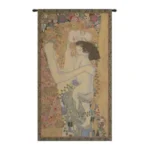
The living room is where most tapestry decisions are made, and rightly so — it is the space in which a large tapestry can have its greatest impact. Above the sofa or fireplace, a substantial art tapestry becomes the room’s primary visual anchor. For living rooms with a traditional or eclectic aesthetic, figurative tapestries — mythological scenes, hunting compositions, or floral designs inspired by Art Nouveau or the Arts and Crafts movement — create a sense of depth and cultural reference. For more contemporary living spaces, abstract or semi-abstract tapestries provide artistic presence without historical association. In either case, the golden rule is simplicity of context: the tapestry should have the wall largely to itself, with minimal competing artwork nearby.
The Dining Room: Backdrop for Occasions
Dining rooms benefit from tapestries that reward sustained viewing at table — pieces with complex narrative content or rich botanical detail that provide something to look at and discuss during meals. Medieval hunting scenes, with their multiple figures and dense woodland settings, are particularly well-suited to dining rooms, as are garden and floral tapestries inspired by the millefleurs tradition. A large tapestry on the wall behind the main seating creates a sense of occasion and ceremony that no other wall treatment can quite achieve. Darker, richly coloured tapestries — deep reds, bottle greens, navy — suit formal dining rooms particularly well, while lighter floral or pastoral designs work beautifully in more relaxed, country-style settings.
The Bedroom: Intimacy and Meaning
The bedroom is an ideal setting for art tapestries of personal significance — pieces whose imagery you want to live with closely and reflectively. A tapestry above the bed headboard creates a canopy-like focal point of great warmth and intimacy. For this position, choose designs that reward quiet, personal contemplation: a moonlit landscape, a serene botanical composition, or a symbolic scene whose meaning deepens over time. Softer colour palettes — dusty rose, sage, ivory, silver-grey — generally suit bedroom settings better than the bold, saturated hues that work well in dining or living rooms. Smaller tapestries (60–100cm wide) work well in bedrooms even with limited wall space, and can be hung singly or in pairs flanking the bed.
The Study or Library: Intellectual Depth
For rooms given over to reading, thinking, and working, art tapestries with intellectual or literary associations are particularly appropriate. Allegorical scenes, cartographic designs, classical or mythological subjects, and tapestries after drawings or engravings from natural history and scientific illustration all work beautifully in studies and libraries. These are rooms where detail matters — where a complex composition yields new visual discoveries over months and years of daily presence. A dark-toned tapestry hung against book-lined shelves or panelled walls creates an atmosphere of scholarly richness that few other decorative choices can replicate. For pieces that combine artistic quality with genuine intellectual content, the range of art tapestries for the home at Charlotte Home Furnishings offers excellent starting points.
Hallways and Transitional Spaces
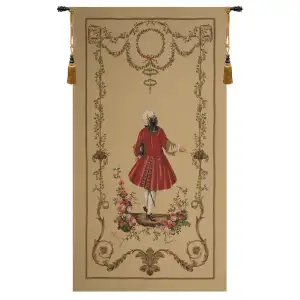
Hallways, landings, and stairwells present particular opportunities for art tapestries. These transitional spaces benefit from pieces that can be appreciated in a brief passing glance — bold, graphic compositions or designs with strong central imagery work better here than intricate narrative tapestries that demand prolonged attention. A long, narrow hallway can be dramatically transformed by a wide tapestry at the far end, creating a visual terminus that draws the eye and makes the space feel intentional and considered rather than merely functional. Tapestries with vertical compositions — tall, narrow pieces featuring trees, architectural elements, or standing figures — are particularly well-suited to stairwells.
Making the Final Choice
Whatever room you are decorating, the most important factor in choosing an art tapestry is genuine personal resonance. The best tapestries are those that you find yourself returning to — whose imagery reveals new details or associations over time, whose colours interact differently with changing light and seasons, whose physical presence you appreciate more, not less, as the years pass. For a comprehensive selection of tapestries spanning all the art-historical traditions discussed above, explore the full range of woven tapestry wall art and find the piece that will define your space for years to come.