
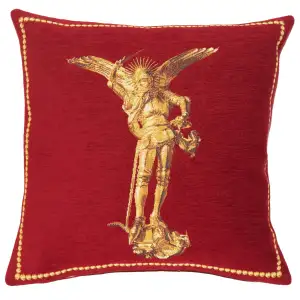

For those who have developed a taste for the visual richness of medieval tapestry art, cushion covers represent one of the most rewarding collecting areas within the broader world of decorative textiles. Accessible in price, enormous in variety, and practically useful in a way that wall tapestries are not, medieval tapestry cushion covers reward careful selection and thoughtful display. This guide offers practical advice for building a collection that is both aesthetically coherent and genuinely pleasing to live with.
Starting with a Clear Aesthetic Direction
The first step in building a meaningful collection of medieval tapestry cushion covers is establishing a clear aesthetic direction. The range of available designs is vast — from spare heraldic compositions featuring a single shield or creature on a plain ground, to densely detailed millefleurs panels crowded with flowers, animals, and figures, to narrative scenes drawn from courtly romance or biblical history. Before purchasing, spend time clarifying which of these broad directions appeals most strongly to you. Collectors who try to include everything tend to end up with arrangements that feel visually confused; those who commit to a clear thematic or stylistic direction create groupings with genuine aesthetic coherence and collecting logic.
Building Around a Colour Family
Even within a consistent thematic direction, medieval tapestry designs use a wide variety of colour palettes, and unifying your collection around one or two dominant colour families is one of the most effective ways to ensure visual harmony. Classic burgundy-and-gold groupings have a formal, heraldic richness that suits traditional interiors. Green and ivory combinations feel fresher and more verdant, evoking garden and forest imagery. Navy-and-cream pairings have a certain restrained elegance that bridges traditional and contemporary settings particularly well. Whatever colour family you choose as your anchor, ensure that individual covers within your collection all share at least one colour in common with the central palette — this creates coherence without uniformity.
Mixing Design Scales
An effective collection of tapestry cushion covers typically includes a mix of design scales: one or two pieces with large, bold central motifs that read clearly from across the room, balanced by pieces with finer, more intricate detail that rewards close inspection. On a sofa arrangement, position the bolder pieces at the centre and work outward to the more detailed ones. This creates a visual rhythm that is engaging without being chaotic. The standard cushion size for tapestry covers is 18″ × 18″ (45cm × 45cm), though 16″ × 16″ and 20″ × 20″ covers are also commonly available — mixing two or three sizes on a single sofa adds additional visual interest. For a wide selection spanning different scales and design complexities, browse the collection of medieval cushion covers to find pieces that complement each other well.
Caring for a Tapestry Cushion Collection
A well-maintained collection of medieval tapestry cushion covers will retain its appeal for decades. Rotate covers periodically to ensure even exposure to light and wear. Keep them away from direct, prolonged sunlight, which will gradually fade even high-quality dyes. Between uses, store spare covers rolled rather than folded to avoid creasing the weave. When washing becomes necessary, hand-wash individually in cool water with a gentle detergent, rinse thoroughly, and lay flat to dry on a clean towel — never tumble dry. Press lightly on the reverse with a cool iron if needed, but never iron directly on the tapestry face.
Displaying Your Collection
Medieval tapestry cushion covers deserve thoughtful display. On sofas and armchairs, group them in odd numbers (three or five) rather than even pairs, as odd groupings tend to look more naturally composed. Ensure that cushion inserts are generously filled — a well-stuffed cushion holds its shape and shows the tapestry design to best advantage, while an under-filled cover looks flat and dejected. Consider using velvet or linen plain cushions alongside your tapestry pieces to provide visual breathing space between detailed designs. And don’t overlook beds: a pair of tapestry cushion covers at the front of a made bed creates a focal point of considerable elegance. For more options to expand your collection, the complete range of medieval tapestry pillow covers at Charlotte Home Furnishings is well worth exploring.