
Belgian tapestries represent one of the finest investments you can make in your home’s interior. Unlike mass-produced wall prints or framed posters, a quality tapestry brings genuine texture, depth, and artistic heritage to any room. But with so many options available — ranging from affordable reproductions to premium woven pieces — how do you choose the right one? This guide walks through the key factors to consider when selecting a Belgian tapestry, ensuring that what you bring home genuinely reflects the tradition it claims to honour.
Understand the Difference Between Woven and Printed Tapestries
The single most important distinction is between genuinely woven tapestries and printed fabric panels marketed as tapestries. A woven tapestry is created on a loom, with the image formed by the interlacing of coloured threads — a process that creates a characteristic texture visible and tactile on the surface. A printed “tapestry” is simply fabric with an image printed onto it, offering no tactile depth and generally far inferior longevity. Always look for product descriptions that specify Jacquard weaving, warp and weft construction, or loom-woven — these indicate genuine tapestry production. If the price seems exceptionally low for the size, it is likely printed fabric rather than a woven textile.
Choose the Right Size for Your Wall
Belgian tapestries come in a wide range of sizes, from small accent pieces (around 50cm x 70cm) to large statement tapestries exceeding 200cm in width. Before purchasing, measure your wall carefully and consider the proportions of the room. As a general guide, a tapestry should fill roughly two-thirds of the wall width it occupies, with balanced space above and below. In rooms with high ceilings, a tall tapestry with a strong vertical composition works well. In more intimate spaces — a bedroom or study — a smaller piece with finer detail rewards close inspection. Consider also the furniture below: a large tapestry positioned above a sofa or sideboard creates an anchored, gallery-like effect.
Consider the Colour Palette Carefully
Belgian tapestries typically use rich, complex colour palettes — deep forest greens, burgundy reds, golden yellows, and warm ochres predominate in classic Flemish designs. When selecting, look for a piece whose dominant tones relate to existing colours in the room rather than introduce too many new ones. A tapestry with complex patterning works best against plain walls; conversely, a simpler, more graphic tapestry can hold its own even in a busier decorative context. Avoid placing tapestries in rooms with strong, conflicting colour schemes — neutral or warm-toned rooms provide the most sympathetic backdrop for traditional Flemish weaving.
Select a Theme That Resonates With Your Aesthetic
Classic Belgian tapestry themes include hunting scenes, millefleurs (thousand flowers) garden compositions, verdure landscapes, mythological narratives, and heraldic designs. Consider which type most naturally aligns with your home’s overall character. Hunting tapestries — featuring stags, hounds, and riders in woodland settings — suit traditional, country-house interiors. Millefleurs designs, with their dense meadow imagery, work beautifully in both traditional and eclectic modern settings. Abstract verdure tapestries (dominated by foliage and colour rather than narrative) offer the most versatile contemporary appeal. For inspiration across the full range of designs and themes available, browse the collection of authentic Belgian tapestries for the home, where centuries of Flemish design tradition are represented in accessible formats.
Check for Border Quality and Finishing
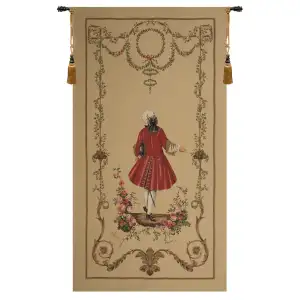
The quality of a tapestry’s border is often a reliable indicator of its overall craftsmanship. Fine Belgian tapestries feature woven borders — not applied fabric strips — that form an integral part of the design. The border should be symmetrical, well-defined, and consistent in width. Examine the reverse of the tapestry if possible: a genuine woven tapestry will have a clearly visible pattern of interlaced threads on its back, whereas a printed fabric will simply show the reverse of the print. Finishing details also matter: look for a sleeve sewn along the top edge for rod hanging, or purpose-made hanging hardware included with the piece.
Think About Longevity and Care
A quality Belgian tapestry is a long-term investment. High-quality wool and cotton tapestries, properly cared for, will retain their colour and structural integrity for decades. Key care considerations: avoid direct sunlight, which causes fading; dust regularly with a soft brush; and vacuum on a low setting using a protective mesh screen. Avoid folding — store rolled if necessary. Unlike paintings, tapestries can withstand the passage of time remarkably well when given basic protection from light and moisture.
Where to Find Quality Belgian Tapestries
The best sources for Belgian tapestries combine knowledgeable curation with transparent product descriptions that honestly represent the weaving method, materials, and dimensions. For a carefully selected range that brings together classic Flemish designs in a variety of sizes, explore the range of premium Belgian woven wall tapestries at Charlotte Home Furnishings — a specialist source for European textile art that covers the full spectrum of traditional Flemish and Belgian design traditions.